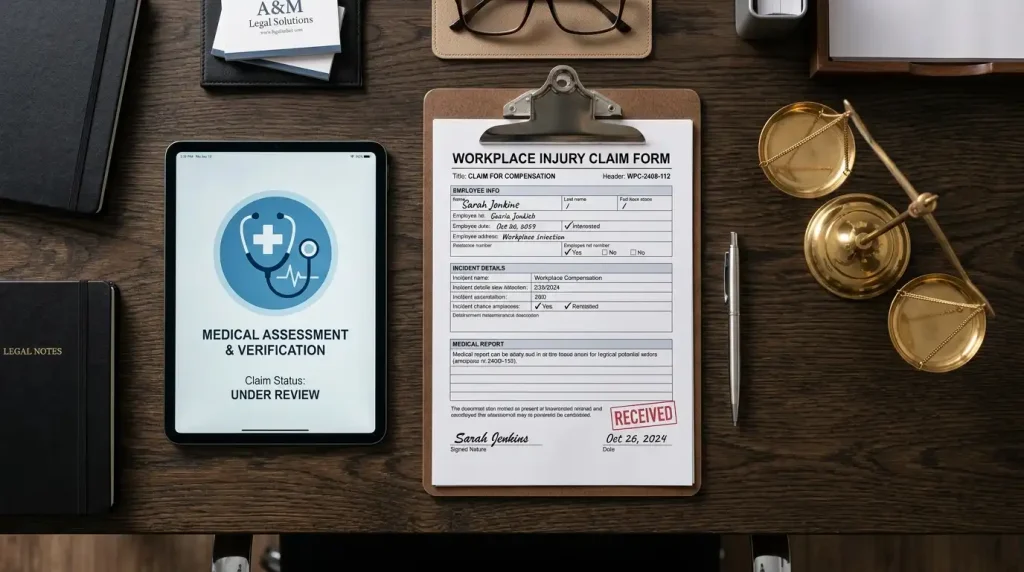

When people think of workplace injuries, they often picture sudden, traumatic events—such as a fall from a ladder, a slip on a wet floor, or an accident involving heavy machinery. However, many of the most debilitating work-related conditions develop slowly over months or even years. Known as cumulative trauma disorders or Repetitive Strain Injuries (RSIs), these conditions result from repetitive motions, awkward postures, and sustained physical stress during routine daily tasks.
Understanding how a repetitive strain injury workers comp claim operates is essential for employees experiencing gradual joint, nerve, or muscle pain. Because cumulative injuries do not stem from a single identifiable accident, securing medical treatment and disability benefits requires clear documentation, timely reporting, and a strong understanding of your rights under workers’ compensation law.
What Are Ergonomic Hazards in the Workplace?

Ergonomic hazards occur when workplace conditions, physical tasks, or equipment setups put excessive strain on the human body. When employees perform physical movements repeatedly without adequate rest, soft tissues like tendons, ligaments, and nerves undergo micro-tears that accumulate over time.
Common workplace ergonomic hazards across office, industrial, and healthcare settings include:
- Repetitive Motion: Performing the same physical action continuously, such as typing, data entry, scanning assembly items, or operating hand tools.
- Static or Awkward Postures: Working with twisted wrists, slouched shoulders, bent necks, or holding elevated arms for extended periods.
- Contact Stress: Continuous pressure against hard physical surfaces, such as resting wrists on sharp desk edges while typing.
- Vibration Exposure: Operating vibrating power tools, air chisels, or heavy machinery that damages peripheral nerves and blood vessels over time.
- Forceful Exertion: Frequently lifting, pulling, pushing, or carrying heavy loads without mechanical assistance or ergonomic lifting equipment.
Common Types of Repetitive Strain Injuries
Repetitive strain injuries can affect virtually any joint or muscle group, but they most frequently damage the hands, wrists, elbows, shoulders, neck, and lower back.
Medically recognized RSIs that frequently qualify for workers’ compensation coverage include:
- Carpal Tunnel Syndrome: Compression of the median nerve within the wrist, causing numbness, tingling, weakness, and radiating pain in the hand and fingers.
- Tendonitis: Inflammation or irritation of a tendon caused by repeated strain, frequently affecting the wrist, shoulder, or biceps.
- Epicondylitis (Tennis or Golfer’s Elbow): Inflammation of the elbow tendons driven by continuous forearm rotation, gripping, or wrist extension.
- Bursitis: Painful swelling of the fluid-filled sacs (bursae) that cushion joints, often triggered by repetitive kneeling, reaching, or lifting.
- Cervical and Lumbar Strain: Chronic spinal muscle and disk strain caused by prolonged sitting in non-ergonomic chairs, heavy lifting, or poor bending posture.
Why RSI Workers’ Comp Claims Face Obstacles
While state workers’ compensation systems cover cumulative trauma injuries, insurance carriers frequently dispute these claims. Unlike a broken bone sustained in a sudden fall, a repetitive motion injury lacks a single dramatic event or incident report.
Insurance adjusters often attempt to deny RSI claims by arguing that:
- The condition is the result of natural aging or degenerative changes rather than job duties.
- The injury was caused by non-work activities, such as hobbies, sports, or home improvement projects.
- The employee had a pre-existing medical condition that accounts for current symptoms.
- The worker failed to report the condition within statutory notification deadlines.
For official research and safety guidelines regarding ergonomic risk factors in the workplace, reviewing standards established by the Occupational Safety and Health Administration provides valuable insight into workplace safety requirements and injury prevention guidelines.
Step-by-Step Guide to Filing an RSI Workers’ Comp Claim
If you suspect you are developing a work-related cumulative strain injury, taking early, structured action is critical to protecting both your health and your legal rights under workers’ comp law.
1. Seek Medical Evaluation Early
Do not wait until the pain becomes intolerable. Visit a medical professional as soon as you experience persistent tingling, numbness, stiffness, or joint pain. Inform the treating physician that your symptoms are related to your daily job duties so they can document the occupational connection in your official medical records.
2. Report the Injury to Your Employer in Writing
Under state workers’ compensation laws, employees must report injuries within specific time limits—often 30 days from the date of injury. In cumulative trauma cases, the “date of injury” is generally defined as the date you first knew (or reasonably should have known) that your medical condition was caused by your job duties. Provide a formal written notice to your manager or HR department immediately.
3. Document Your Daily Job Duties
Keep a detailed journal outlining your daily tasks. Record how many hours you spend performing specific repetitive actions, describe equipment used, detail ergonomic deficiencies at your workstation, and log when physical symptoms flare up during your shift.
To understand general workplace safety standards and ergonomic research on cumulative physical stress, consulting resources provided by the National Institute for Occupational Safety and Health offers authoritative data on occupational exposure limits.
4. Request an Ergonomic Assessment
Ask your employer for an official workstation evaluation. Employers are often responsible for providing reasonable accommodations, such as adjustable desks, ergonomic keyboards, wrist supports, or alternative tools that reduce physical strain and prevent further damage.
Employer Obligations and Workplace Prevention

Employers have a fundamental responsibility to maintain a safe working environment free from recognized physical hazards. Proactive companies implement comprehensive ergonomics programs that identify risk factors, adjust workstation designs, allow regular stretch breaks, and rotate physical duties among staff to minimize repetitive strain.
If an employer fails to address known ergonomic hazards or denies light-duty accommodations recommended by a treating physician, injured workers have the right to challenge those decisions through the state workers’ compensation board.
Final Thoughts: Protecting Your Health and Income
A repetitive strain injury can significantly impact your career, physical comfort, and long-term earning capacity. By recognizing ergonomic hazards early, seeking prompt medical care, and following proper reporting protocols for your repetitive strain injury workers comp claim, you can secure the medical treatments and wage replacement benefits you deserve.
If your employer or their insurance carrier disputes your cumulative trauma claim, consulting an experienced workers’ compensation professional can help ensure your rights are protected throughout the appeal process.