
1. Missed Reporting or Filing Deadlines

State laws enforce strict statutory timelines for reporting workplace injuries. In many jurisdictions, you must notify your employer in writing within 30 days of the incident (and in some states, as few as 3 to 10 days). Furthermore, formal claim petitions with the state workers’ compensation board carry separate statutes of limitations.
If you fail to submit written notice or file administrative forms within these mandated windows, the insurance carrier will automatically deny your claim based on procedural non-compliance.
2. Employer Disputes the Accident Occurred at Work
To qualify for benefits, your injury must arise out of and occur in the course of employment. Insurance adjusters regularly deny claims if your employer reports that:
- The accident occurred off-site while you were commuting or on a personal break.
- There were no direct witnesses to verify your account of the incident.
- You were engaged in horseplay, intoxication, or willful misconduct at the time of injury.
3. Lack of Initial Medical Evidence
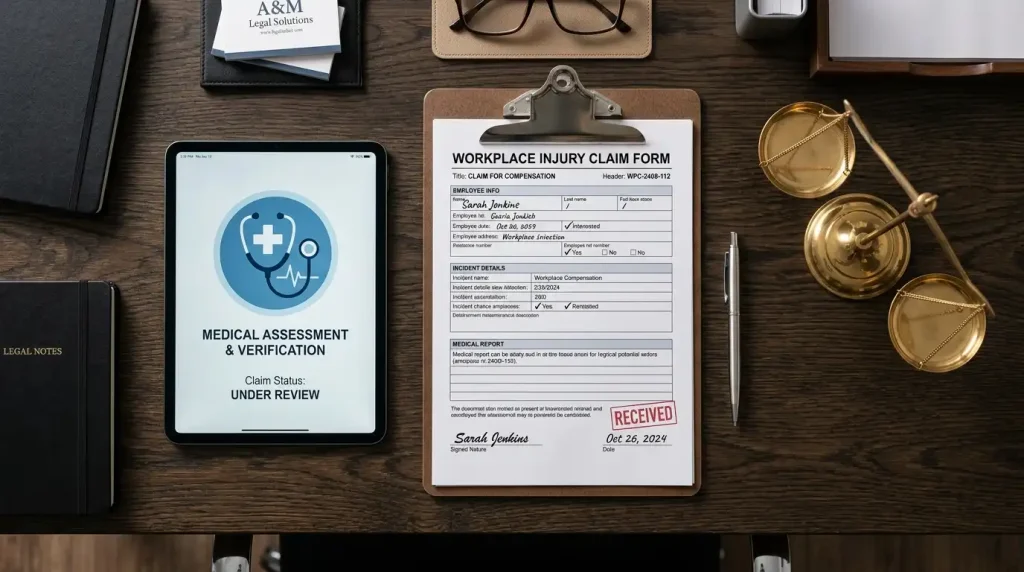
A successful workers’ comp claim relies on clear, objective medical records linking your physical impairment directly to job duties. If you delay visiting a physician immediately after the accident, or if your treating doctor fails to explicitly state that the injury was work-related in their chart notes, the adjuster will cite a lack of causal connection to reject coverage.
4. Pre-Existing Medical Conditions
Insurance companies frequently scan past medical histories looking for prior injuries to the same body part. If you previously suffered a back sprain, knee injury, or shoulder strain, adjusters may argue your current symptoms stem entirely from a pre-existing health condition rather than a new workplace event.
Under state workers’ compensation laws, an event that aggravates, accelerates, or worsens a pre-existing condition is generally compensable. However, proving aggravation requires precise comparative medical evaluations.
5. Discrepancies and Inconsistent Statements
Inconsistencies across documentation are major red flags for claim adjusters. If your initial incident report to human resources states you hurt your lower back lifting a heavy box, but your emergency room intake record notes you felt back pain while getting out of your vehicle at home, the insurer will cite conflicting statements to invalidate your claim.
6. Claim Filed After Termination or Layoff
Filing an injury claim immediately after being let go, demoted, or terminated triggers intense scrutiny. Insurers often view post-termination filings as retaliatory actions or attempts to secure unemployment alternatives. While legitimate injuries reported post-termination are legally actionable, you face a higher burden of proof to demonstrate the injury happened prior to your discharge.
7. Injury Falls Under Non-Covered Categories
Not every medical issue experienced at work qualifies for coverage. Depending on state statutes, insurance carriers routinely issue denials for:
- Stress and mental health conditions without an accompanying physical trauma.
- Self-inflicted injuries or injuries sustained during voluntary recreational company events.
- Ordinary diseases of life (like common viral infections) that cannot be linked directly to workplace exposure.
How to Fight Back: Step-by-Step Appeal Strategy
A claim rejection letter triggers your legal right to appeal through your state’s administrative court system. To mount an effective challenge, follow this structured response strategy:
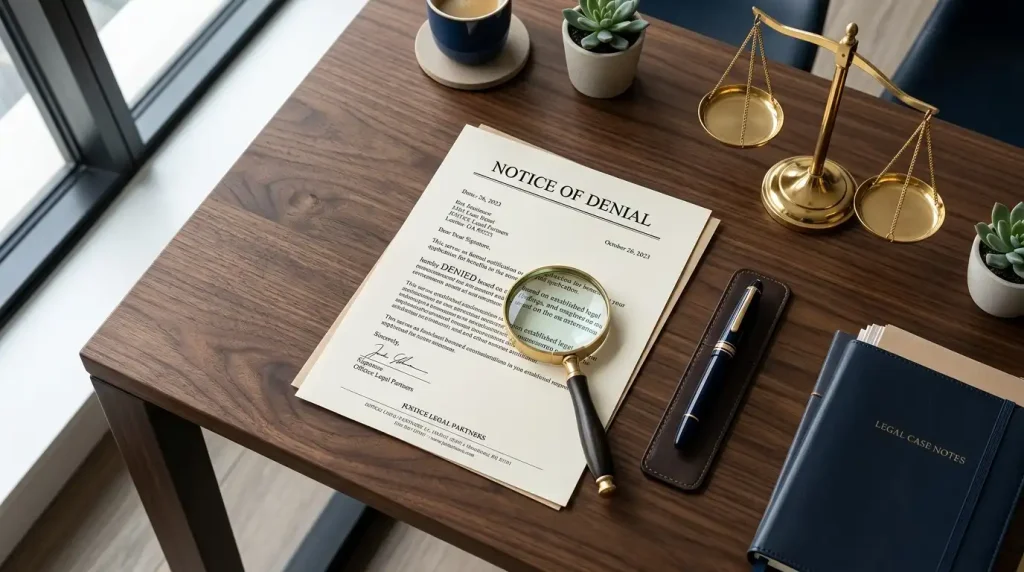
Step 1: Review the Official Denial Notice
Carefully read the rejection letter sent by the insurance carrier. State regulations mandate that insurers specify the exact legal and factual grounds for denying your claim. Identifying whether your rejection stems from missing documents, medical causation issues, or employer disputes determines your next move.
Step 2: Note Your Appeal Deadline
Every state sets a strict deadline to file a formal appeal or Application for Adjudication. This window can range from 30 days to a year depending on local administrative rules. Missing this cutoff permanently forfeits your right to contest the decision.
Step 3: Gather Supplemental Medical Evidence
If your claim was denied due to medical causation or pre-existing conditions, schedule a detailed examination with your physician. Ask your doctor to write a comprehensive narrative report explicitly connecting your physical limitations to your specific job responsibilities.
Step 4: Request a Formal Appeal Hearing
File the required appeal paperwork with your state’s workers’ compensation agency. To review official federal guidelines, safety data, and statutory standards, consult national resources like the U.S. Department of Labor (DOL).
Summary Comparison: Informal Dispute vs. Formal Appeal
Depending on your state’s system, you may have the option to attempt informal resolution before entering formal court proceedings:
| Resolution Path | Primary Objective | Best Used For |
|---|---|---|
| Informal Negotiation | Resolving minor paperwork errors or submitting missing medical records directly to the adjuster without court intervention. | Missing doctor notes, minor administrative errors, or simple wage calculation discrepancies. |
| Formal Administrative Appeal | Presenting evidence, witness testimony, and expert medical opinions before an Administrative Law Judge (ALJ). | Disputed accident occurrence, pre-existing condition arguments, or complete medical benefit denials. |
When to Hire a Workers’ Compensation Attorney

Navigating an administrative appeal while recovering from an injury is challenging. You should strongly consider hiring an experienced workers’ compensation lawyer if your claim involves severe injuries requiring surgery, your employer denies the incident occurred, or you are facing a formal evidentiary hearing before a judge.
Workers’ comp attorneys operate on a contingency fee basis, meaning they only receive payment if they successfully recover benefits or negotiate a settlement on your behalf, with fees strictly capped by state law.
Appeals Preparation Checklist
Use this quick checklist to ensure your appeal is thoroughly organized before filing:
- Located and reviewed the written Notice of Denial.
- Marked the official appeal filing deadline on your calendar.
- Obtained complete copies of all treatment records and diagnostic scans.
- Requested a medical narrative report from your attending physician.
- Collected witness statements, incident reports, and relevant workplace correspondence.
- Consulted a qualified workers’ comp attorney for a case evaluation.