Step 1: Seek Immediate Medical Treatment

Your health and physical safety always take priority. Immediately following a workplace accident, seek emergency medical care if necessary, or visit an authorized healthcare provider.
Beyond protecting your physical wellbeing, prompt medical attention creates an official, objective record of your injuries. When speaking with emergency personnel or attending physicians, inform them explicitly that your injury occurred while performing job duties. Ensure the doctor notes the exact date, time, and circumstances of the incident in their initial evaluation report.
Step 2: Notify Your Employer in Writing
Notifying your supervisor or human resources department is a legally mandatory prerequisite before filing an official administrative claim. While verbal notice is better than none, you should always submit a formal written notice of injury.
- Respect State Notice Deadlines: State laws strictly govern how quickly you must report an injury—ranging from 30 days in many jurisdictions to as few as 3 to 10 days in others.
- Include Essential Details: Clearly outline the date, time, precise location, specific job task involved, and nature of your injury.
- Retain Copies: Save a signed and dated copy of your notification letter, or keep a screenshot/delivery confirmation if submitted electronically.
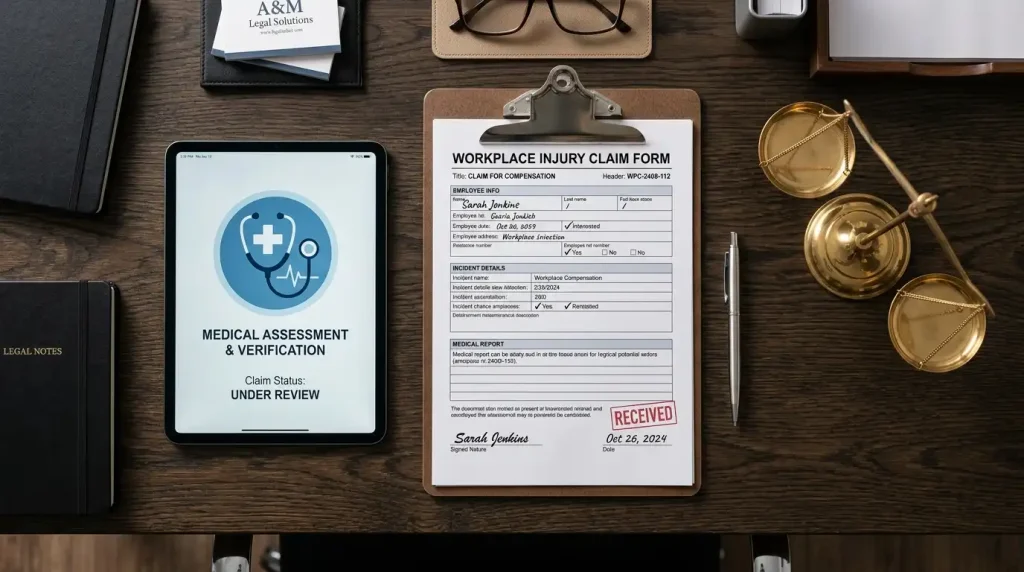
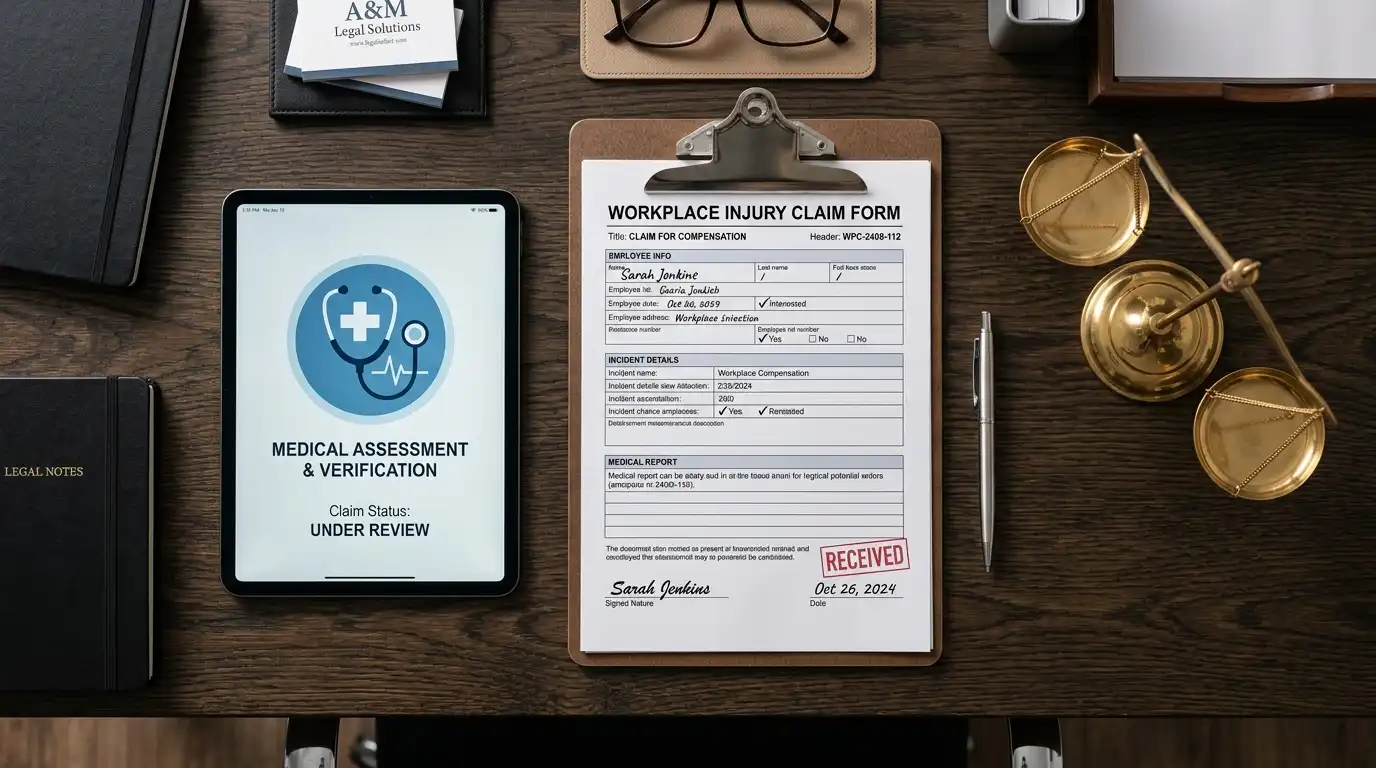
Step 3: Complete and Submit Official Claim Forms
Once you notify your employer, they are legally required to provide you with state-specific workers’ compensation claim forms (such as Form DWC-1 in California or Form C-3 in New York).
Take your time filling out this documentation. Double-check all personal identification information, employment history, and injury descriptions. Clearly describe every body part affected by the incident—if you hurt your shoulder and lower back, list both. Leaving out secondary symptoms early on can make it difficult to get medical coverage for those body parts later in the claim process.
Step 4: Track Your Employer’s and Insurance Carrier’s Filings
 After you return the completed claim form to your employer, they must complete their portion and submit the package to their insurance carrier and state workers’ compensation board.
Statutory timelines require insurance carriers to approve, deny, or temporarily accept your claim within a set window (typically 14 to 30 days). For verified occupational health standards and employer safety compliance guidelines, you can consult resources provided by the Occupational Safety and Health Administration (OSHA).
Key Timeline Breakdown: From Injury to Benefits
Understanding what happens behind the scenes helps eliminate anxiety while waiting for your claim to process. Here is how a typical claim progresses:
| Phase | Action Required | Typical Timeframe |
|---|---|---|
| Injury Occurrence | Seek medical care; inform attending medical staff. | Immediate / Day 1 |
| Formal Notice | Submit written injury report to supervisor/HR. | 1 to 30 Days (State-dependent) |
| Form Submission | Complete and return official state claim forms. | Within 3–7 days of receipt |
| Carrier Review | Insurance adjuster evaluates medical records and facts. | 14 to 30 Days |
| Benefit Delivery | First wage replacement check arrives upon approval. | Within 14 days of approval |
Top Reasons Workers’ Comp Claims Suffer Delays
Claims processor backlogs happen, but most avoidable delays stem from minor administrative errors made during the initial reporting phase. Avoid these common pitfalls:
- Late Injury Reporting: Waiting weeks to report an injury raises suspicion with adjusters, who may question whether the injury actually happened at work.
- Inconsistent Statements: Providing one description of the accident to your supervisor and a conflicting account to your treating physician creates instant red flags.
- Missing Employer Signatures: Ensure your supervisor or HR representative promptly signs and dates their section of the official claim paperwork.
- Incomplete Medical Records: Delays often occur because the insurance carrier is waiting on clinic chart notes or diagnostic imaging results.
Proactive Strategies to Keep Your Claim Moving
You do not have to sit back passively while waiting for claim decisions. Take these proactive steps to maintain control over your file:
- Maintain a Claim Binder: Keep a physical folder or digital drive containing every letter, form, medical bill, and work restriction note.
- Log All Communications: Record the date, time, name, and summary of every phone call or email exchange with insurance adjusters and medical offices.
- Follow Doctor’s Orders Strictly: Attend all scheduled physical therapy sessions and specialist appointments. Missing medical appointments provides adjusters grounds to argue your injury has resolved.
- Confirm Receipt of Documents: Whenever you mail or email forms, follow up with a brief message to verify the adjuster received them.
When to Seek Legal Guidance
While many straightforward claims proceed smoothly, complex situations require experienced legal insight. Consider consulting a qualified workers’ compensation attorney if your employer denies the accident happened, the insurance carrier denies medical coverage, your wage checks are consistently late, or you are asked to return to work before your doctor clears you.
Summary Checklist for Claimants
Use this quick checklist to ensure your initial filing is complete and protected against delays:
- Obtained emergency care or visited an authorized medical provider.
- Submitted a written injury report to your employer within state deadlines.
- Accurately filled out every section of the official state claim form.
- Listed all injured body parts on medical and administrative paperwork.
- Kept copies of all submitted documents for your personal records.